In today’s landscape, achieving success is often easier than maintaining anonymity. But what about achieving both?
In 2024, success for a music artist typically entails:
- A robust schedule of concerts
- Considerable music sales across physical and digital platforms, as well as radio and TV exposure
- High levels of streaming activity
- Active engagement with fans via social media platforms
However, if anonymity is the goal, one would forgo concerts, sales, radio and TV appearances, and eschew social media entirely. Instead, success would be measured solely by streaming metrics.
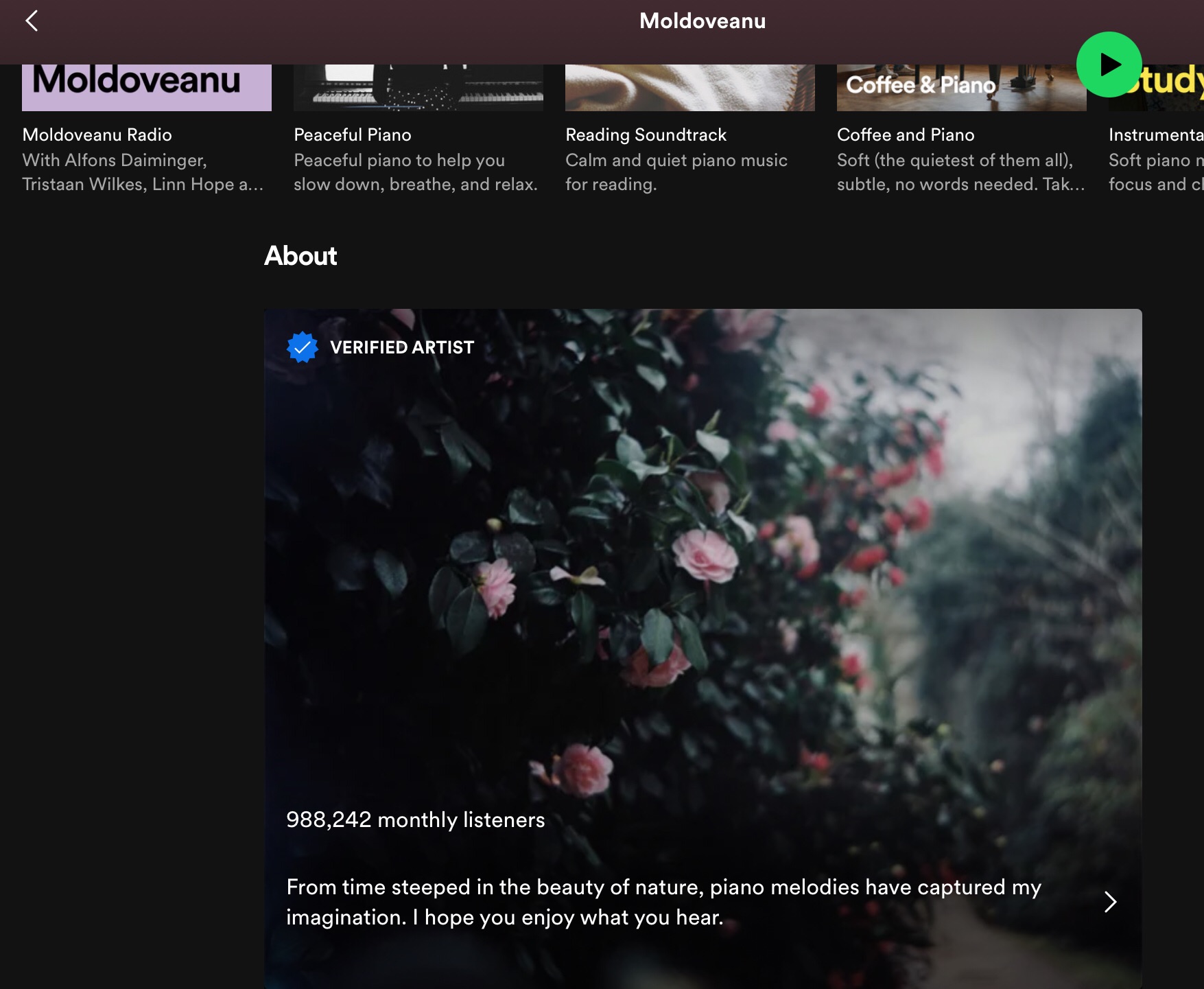
Take, for instance, the case of Moldoveanu, a Romanian classical-crossover pianist and composer. Despite maintaining anonymity, Moldoveanu has achieved remarkable success, leaving many wondering about his identity.

Is he really successful?
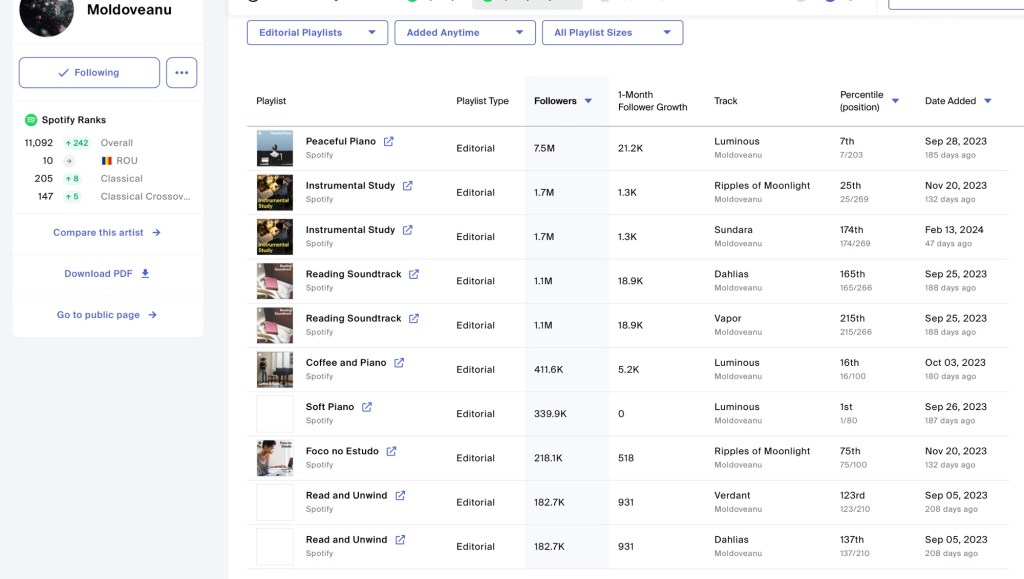
With a modest catalog of just 18 tracks, all released after 2020 and averaging around 2 minutes and 30 seconds each, Moldoveanu boasts an impressive 988,242 monthly listeners on Spotify alone. Despite having a relatively small following of 1.18k on the platform, his massive listener base is primarily attributed to inclusion in editorial playlists. This phenomenon raises the question: Is Moldoveanu truly successful?
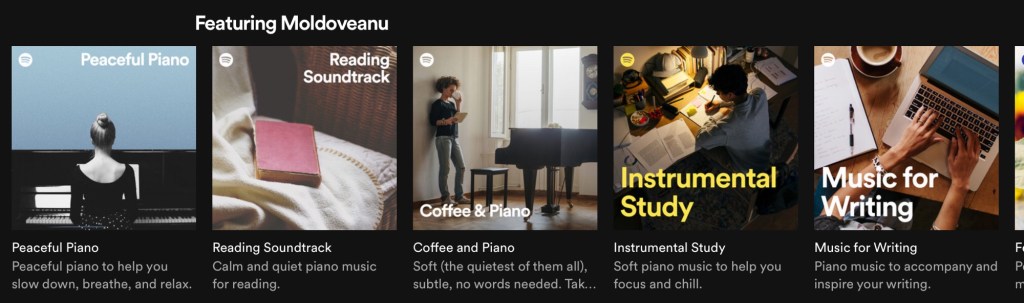
Undoubtedly, yes. His staggering streaming numbers underscore the potential for success even in the absence of traditional markers or public recognition.
So who is Moldoveanu?
Moldoveanu remains an enigma, with no definitive identification or disclosure on his part.
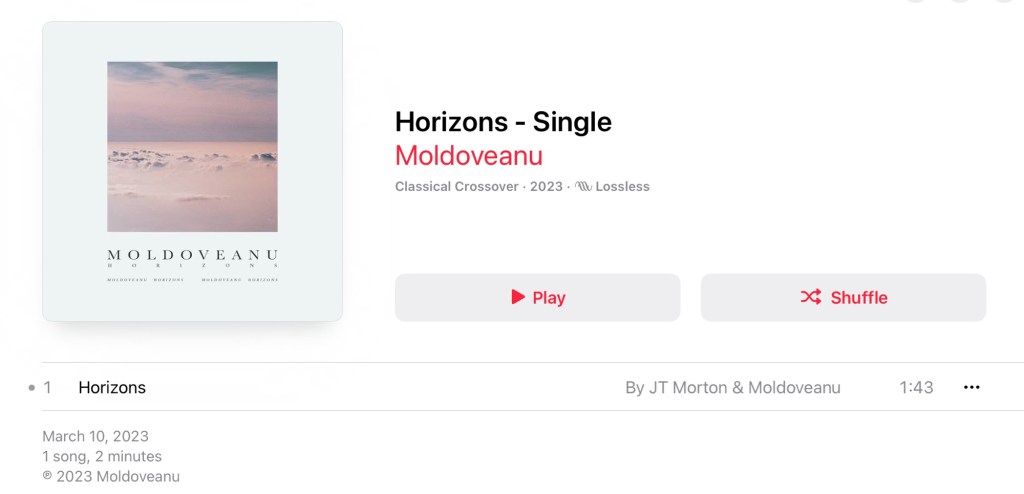
His music, characterized by short compositions played on a felt piano, lends itself perfectly to the playlist-centric landscape fostered by platforms such as Spotify and Apple Music. The artist’s name, being a masculine conjugation in Romanian, leads to the assumption that Moldoveanu is male. Yet, beyond this linguistic clue, little else is known about the individual behind the music.


Indeed, Moldoveanu’s monthly streams on Spotify, totaling 2.7 million, translate to a minimum income of $10.5k. This substantial sum is sufficient to sustain the anonymous piano artist from Romania comfortably, without the need for live performances or CD sales.
Such financial viability underscores the transformative power of digital platforms in enabling artists to thrive independently, even in the absence of traditional avenues for exposure and revenue generation.




 George Motoc
Come on, this has to be AI generated. No name, no concerts, no nothing? Spotify is creating AI playlists with fake artists so they don’t have to pay royalties to artists.